
Our Ugandan Vanilla Operation: Farms, Curing, and Grading
Every vanilla supplier claims “direct from origin.” Here’s what that actually looks like when it’s true.
E. Vanille Holdings Ltd is our own company on the ground in Uganda. It sources green vanilla directly from farmers we work with season after season, cures and grades the beans at our own facility, runs quality control in-house, and exports directly to our warehouse in Florida. No consolidators, no exporters-for-hire, no beans of unknown history. This page walks through the operation, step by step — because when you buy vanilla beans from us, this is what you’re actually buying.
Comparing origins? Read Ugandan vs. Madagascar vanilla beans — species, flavor, harvest cycle, and price volatility, side by side.

Why Uganda Grows World-Class Vanilla
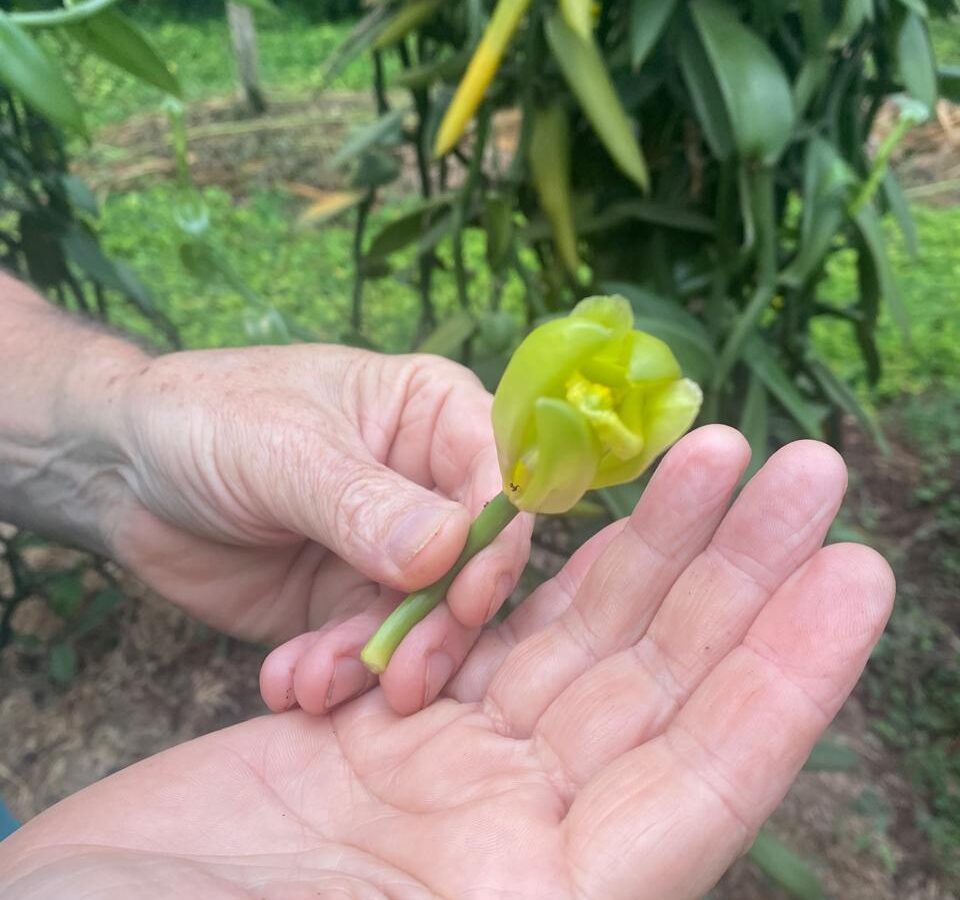
Uganda sits on the equator, with rich volcanic soils, dependable rainfall, and the altitude vanilla orchids love. The country grows Vanilla planifolia — the same species as Madagascar bourbon vanilla — but the terroir produces a distinct character: bold, chocolatey, earthy, and high in vanillin, with a strength that carries through extraction, baking, and brewing where subtler beans fade.
Two Harvests a Year — The Structural Advantage
Uganda’s equatorial position gives it something almost no other vanilla origin has: two flowering seasons, and therefore two harvests per year (December–February and June–August). Madagascar gets one.
For buyers, this is not trivia — it’s the whole ballgame:
- Supply never goes dark. A weak harvest at a single-crop origin means a year of scarcity. Uganda replenishes twice a year.
- Prices stay rational. The Madagascar cycle of shortage, speculation, and collapse has burned every extract producer at least once. Dual harvests dampen that volatility.
- Contracts are keepable. We can commit to recurring delivery schedules and locked pricing because we know when the next crop lands — twice a year, every year.
Direct Farmer Relationships
We don’t buy at open markets, where beans are picked early, handled roughly, and mixed beyond tracing. We source green vanilla directly from farmers we know, and we pay for quality.
- Harvest timing discipline. Vanilla picked before full maturity never develops proper vanillin. Our field team works with farmers on pod-by-pod harvest timing — and we reject immature pods at intake.
- Fair, direct payment. Farmers who are paid properly for mature, well-handled pods keep growing vanilla and keep selling it to us. Consistent quality starts with a consistent buyer.
- Season-over-season continuity. The same farms, the same field officers, the same standards — that’s what makes traceability real rather than a marketing line.
Curing: Where Vanilla Is Actually Made
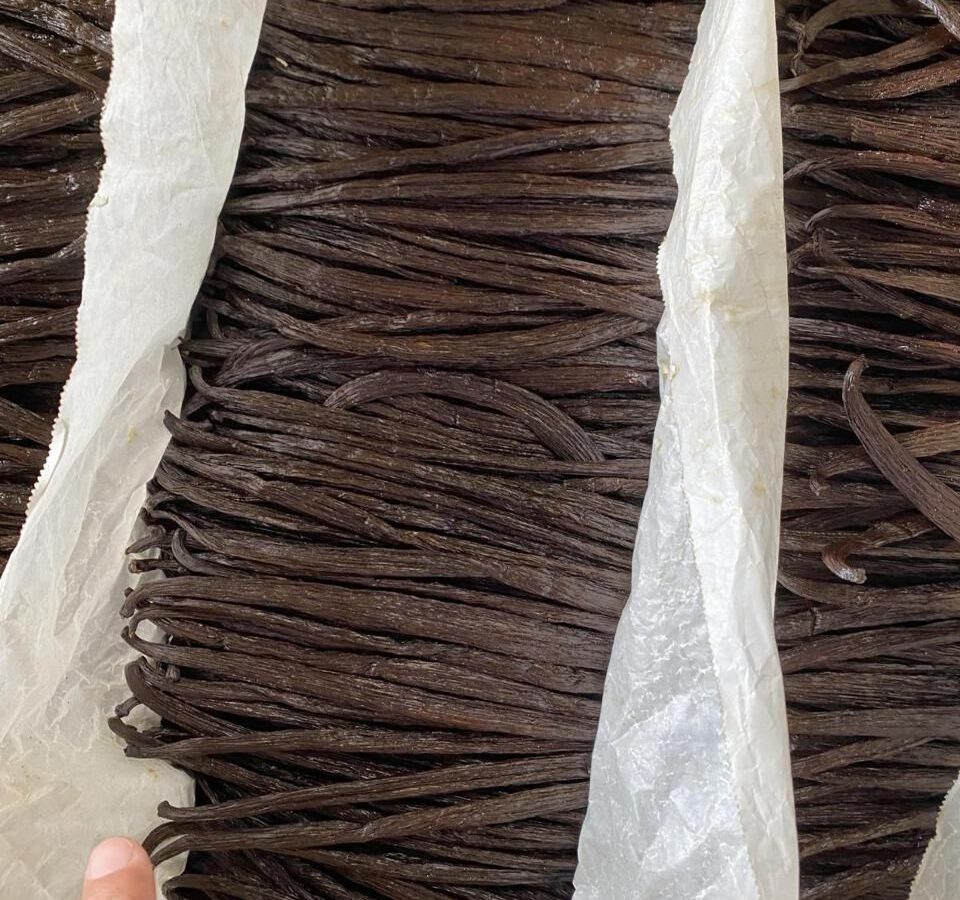
Green vanilla pods have no aroma. Everything you recognize as “vanilla” is created during curing — a months-long, labor-intensive process that most importers never see because it happens three transactions upstream. We run it ourselves.
- Killing. Fresh pods are heat-treated to stop vegetative growth and kick off the enzymatic reactions that develop flavor.
- Sweating. Beans are wrapped and held warm so vanillin precursors convert — this stage builds the aromatic backbone.
- Slow drying. Weeks of alternating sun exposure and shade rest, with beans handled daily. Rushed drying is the #1 quality killer in commodity vanilla; we don’t rush it.
- Conditioning. Beans rest in closed boxes for weeks while flavor deepens and stabilizes, checked continuously for moisture and any sign of mold.
Because curing is ours, the moisture and vanillin numbers on our spec sheets are numbers we produced — not numbers we were told.

Grading and Quality Control
Every lot is graded at our facility before export:
- Sorting by length, appearance, flexibility, and oil content into Grade A gourmet whole beans and Grade B extract-grade splits — both running 5–6 in (13–15 cm), roughly 125–150 beans to the pound
- Moisture testing on every batch — 32% for gourmet Grade A, 28% for extract grade, verified rather than eyeballed. It is a narrower gap than the trade usually implies, and we would rather publish the real numbers than the flattering ones
- Vanillin analysis documented in a Certificate of Analysis available for every lot. Our beans run 2.5% vanillin in both grades — grading sorts on looks and moisture, never on flavor
- Organic certification available on request. Our beans are grown and cured without additives, irradiation or artificial vanillin, but they are not sold as certified organic by default; ask before ordering for a certified label
- Sanitary inspection and export documentation, including phytosanitary certification
Beans that don’t meet grade don’t ship under our name. It’s that simple — and it’s only possible because the grading table is ours. What separates the two grades in practice is explained in Grade A vs. Grade B.
From Our Hands to Yours
Graded beans are vacuum-packed, boxed (10kg/25kg Grade A; 20kg Grade B), and exported directly to our distribution warehouse in Florida. From there they ship nationwide — overnight when you need it, in quantities from a single pound upward, with tonne lots quoted under contract. The chain of custody from farm to your dock has exactly one company in it.
Traceability You Can Audit
For every order we can tell you the sourcing region, curing batch, grading date, and export lot. Food brands use this for label claims and supplier audits; extract producers use it for lot-level consistency; ice cream and pastry customers use it to explain the product on a menu. Traders can’t offer it because they genuinely don’t know. We do, because we were there for every step.
Taste the Difference Origin Control Makes
Request a business sample and run our beans through your actual process — extraction, bake, churn, brew. Then compare the numbers and the flavor against what you’re buying now.
Text +1 786-896-8446 — we’ll call you back. Or request a quote and samples, check current vanilla bean prices, see bulk and contract terms, or learn more about Evanille.