
Vanilla is one of the most expensive spices on earth, and most of the value lost between purchase and use is lost to storage. Beans dry to sticks in a drafty jar. A humid box grows mold in a warm kitchen. Somebody puts the lot in the walk-in because that’s where expensive things go, and six weeks later a $400 box scrapes like bark. None of that is inevitable — but two of the most common instincts, refrigerate it and freeze it, are the wrong ones.
The short version
Airtight. Cool. Dark. Never the refrigerator.
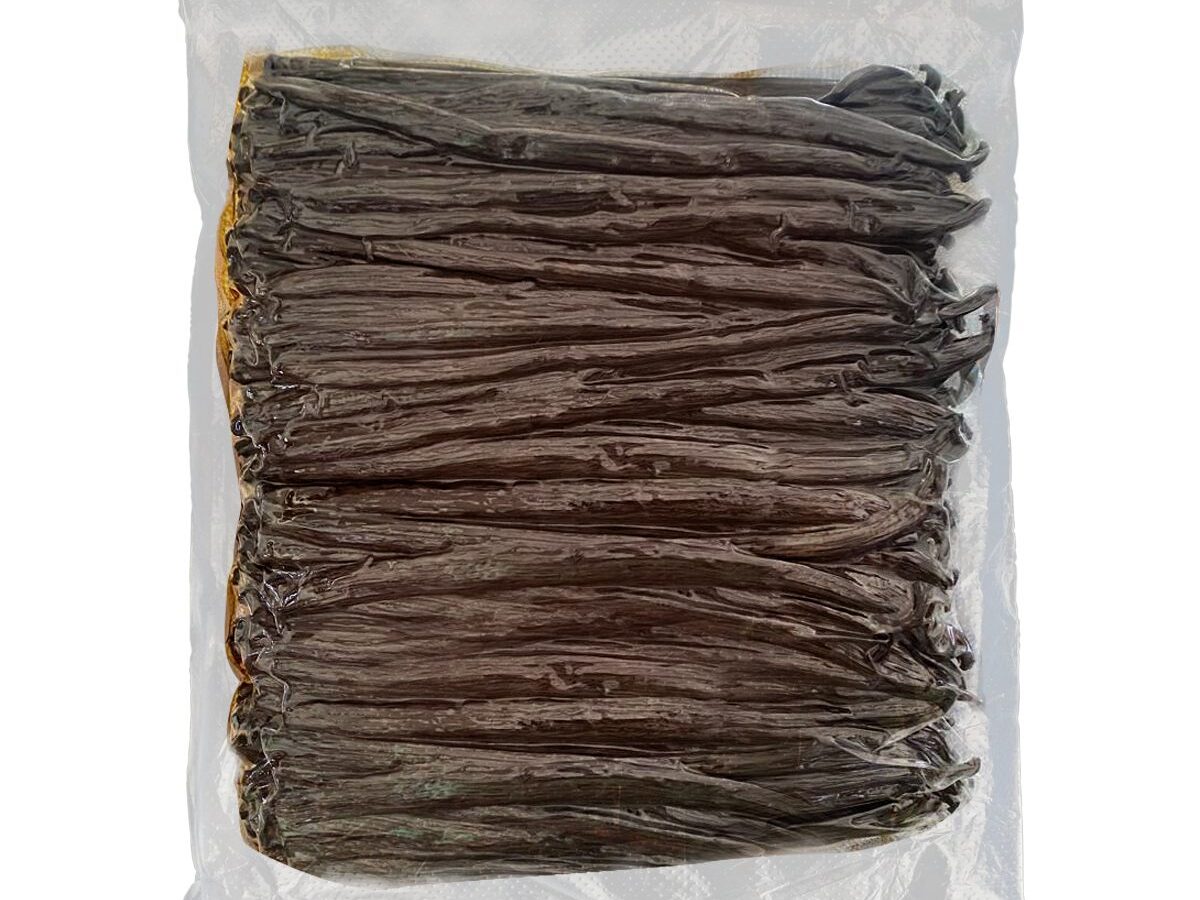
- Container: glass jar with a gasket seal, or the original vacuum pack left unopened
- Temperature: roughly 60–75°F (15–24°C) — a dry store or cupboard away from the ovens
- Light: none. Dark cupboard or opaque container
- Humidity: stable and moderate. Keep it off a hot, steamy kitchen line
- Maintenance: open the jar 10–15 minutes every few weeks to exchange air
The rest of this guide covers the failure modes, so you can diagnose a lot that’s gone wrong.
Why not the refrigerator
A refrigerator is a dehumidifier that happens to be cold. It pulls moisture out of everything in it, and a cured vanilla bean is defined by its moisture — 32% for our Grade A, 28% for our Grade B. In the fridge the pod wall hardens and the caviar becomes hard to scrape.
The worse problem is condensation. Every time the container comes out, warm room air hits cold glass and cold beans and water condenses on the pods — exactly what mold wants. The in-and-out cycle does more damage than the cold itself. Refrigerators also smell, and vanilla takes on whatever else is in there.
Freezing fails for related reasons: ice crystals damage the pod structure, freezer air is extremely dry, and every thaw condenses water on the surface. Frozen beans come out brittle and flat. If you have more vanilla than you can use in a year, the answer isn’t the freezer — it’s converting the surplus to extract, which is stable indefinitely. See how to make vanilla extract.
Mold vs. frost: know the difference before you throw anything out
The most common false alarm in a professional kitchen.
Vanillin crystals (“givre”) are white, needle-like or feathery crystals that bloom on the outside of a bean, usually on the best lots — vanillin migrating to the surface and crystallizing. Givre is a marker of high vanillin content; French buyers pay a premium for beans that show it. It has no smell of its own and brushes off as sharp little crystals.
Mold is fuzzy and three-dimensional, typically white-grey, green or blue, musty-smelling, and appears in patches where beans touch each other or the jar wall. In good light the difference is obvious: crystals are geometric, mold is fibrous.
If you find mold: discard the affected beans, wipe the rest with a cloth dampened in high-proof neutral alcohol, dry them fully, and repack in a clean, bone-dry container. Then fix the cause — too much moisture, too much heat, or a jar that was never aired.
Shelf life by grade
| Grade | Moisture | Best flavor within | Usable to | Main failure mode |
|---|---|---|---|---|
| Grade A / gourmet | 32% | 6–12 months | ~2 years sealed | Mold — it’s the wetter bean |
| Grade B / extract grade | 28% | 12–18 months | 2+ years sealed | Drying out further |
| Splits and cuts | Varies by lot | 6–12 months | ~2 years | Dries faster — more cut surface |
| Scraped/spent pods (dried) | <10% | 6 months | 1 year+ | Mold if not fully dried first |
Note that the two grades are closer than the folklore suggests — 32% against 28% is four points, not a different class of product — so store them the same way. Grade A is a little more mold-prone and Grade B a little more prone to drying out, but neither difference changes the method.
Beans fade rather than spoil, and dry beans are not wasted beans: a pod too stiff to scrape is still a fine extract bean, since moisture loss concentrates the solids. Move dried Grade A into your extract program rather than binning it, and buy extract grade deliberately for that job going forward.
How to rehydrate dried-out vanilla beans
Fast method — warm liquid. Cover the beans with warm (not boiling) milk or water in a shallow dish, film it, and leave a few hours or overnight. Use milk if they’re headed into a dairy application and pour the infused milk into the recipe — you’ve lost nothing. Expect workable pods, not brand-new ones.
Slow method — controlled humidity. Put an open shot glass of water inside the sealed jar with the beans, not touching them, for 3–7 days at room temperature. This rescues a whole lot at once without committing it to a recipe. Pull the water as soon as the pods bend without cracking, or you’ll grow mold instead.
What not to do: don’t microwave, don’t soak for days, and don’t rehydrate more than you’re about to use. A rehydrated bean is a higher-moisture bean — on a shorter clock and more mold-prone than the rest of the lot.
Bulk and vacuum-packed storage for commercial quantities
Storing a kilo is a different problem from storing a 10 kg box.
- Leave vacuum packs sealed until you need them. Vacuum packing removes oxygen and most spoilage molds are aerobic. An unopened vacuum pack in a cool dry store is the best state a bean can be in — better than any jar you’ll build.
- Break bulk into working units. Opening a 10 kg or 20 kg box, repack it in vacuum bags sized to two to four weeks of production. One bag out at a time, the rest stays sealed. That’s the difference between a box that lasts a year and one that dries out in three months.
- Label everything — lot, grade, receipt date, moisture if stated — and rotate FIFO.
- Watch the room. A stable dry store at 65°F holds beans far better than a kitchen that swings 25 degrees a day.
- Buy against usage. A quarter at a time suits most shops. Buying a year’s Grade A to save on the per-pound price is false economy if your storage isn’t stable — volume math is on our prices page and in wholesale tiers.
Evanille ships from US stock in Florida, and because our Ugandan operation harvests twice a year, resupply doesn’t depend on a single annual shipment — which is what lets a kitchen hold weeks of stock instead of a year of it. More: our Uganda operation.
How to scrape and use vanilla bean caviar
The seeds inside a pod — vanilla bean caviar — are the visual signature of real vanilla in a pale product.
Technique. Lay the pod flat. Hold the tip and run the point of a paring knife down its length in one pass to split it. Open it out and scrape end to end with the back of the blade, not the edge: the blunt side lifts seeds cleanly and leaves the pod wall intact. If the pod is stiff, warm it 20–30 seconds in your hand or a low oven and it scrapes twice as easily.
Yield. One plump Grade A bean gives about ½ to 1 teaspoon of caviar — roughly 0.5 to 1 gram. That should reset expectations: most of a bean’s flavor lives in the pod wall, not the seeds. Scraping a bean and discarding the pod throws away the majority of what you paid for. Steep the pod, strain it out, then dry it and bury 2–3 pods per kilo of sugar for vanilla sugar, or grind them into vanilla powder.
Dispersion. Seeds clump in cold liquid. Rub the caviar into a spoonful of the recipe’s sugar first and you’ll get even flecking instead of black knots.
Don’t store loose caviar more than a day or two — scraped seeds have enormous surface area and lose aroma fast. Scrape to order.
Need beans that scrape properly? Grade A gourmet is the buy for caviar work; splits and cuts are the value option when the pod gets strained out. Browse all vanilla beans or text +1 786-896-8446 — we’ll call you back.
FAQ
What is the best way to store vanilla beans?
In an airtight container — a gasket-sealed glass jar, or the original vacuum pack unopened — kept cool (60–75°F / 15–24°C), dark, and away from heat and steam. Open the container for 10–15 minutes every few weeks to exchange air and shed residual humidity. Never the refrigerator or freezer.
Can you store vanilla beans in the fridge or freezer?
No. A fridge dehydrates the pods and, worse, condenses water on their surface every time you take them out — the exact condition mold needs. Freezing damages the pod structure with ice crystals and dries the beans out. If you have more vanilla than you can use in a year, convert the surplus to extract instead.
How long do vanilla beans last?
Stored properly, Grade A beans keep their best flavor for 6–12 months and stay usable up to about two years; drier Grade B extract-grade beans are more stable, at 12–18 months for peak flavor and well over two years usable. Beans fade rather than spoil — an old, dry bean is still a good extract bean.
The white stuff on my vanilla beans — is it mold?
Probably not. White, needle-like or feathery crystals are vanillin crystals (“givre”), a marker of high vanillin content and a sign of quality. Mold is fuzzy and three-dimensional, usually white-grey, green or blue, appears in patches, and smells musty. Crystals are geometric and brush off; mold is fibrous. Discard moldy beans, wipe the survivors with high-proof alcohol, dry them, and repack in a clean dry container.
How much caviar does one vanilla bean yield?
About ½ to 1 teaspoon, roughly 0.5 to 1 gram, from a plump Grade A pod. Split it lengthwise and scrape with the back of the knife, then keep the pod for the infusion — most of the bean’s flavor is in the pod wall, not the seeds.